
Refugee and disaster-relief shelters for procurement teams. Spec-driven supply, and a standing stock for buyers who cannot wait on a production run.
Relief work does not wait for a production run. We hold a standing stock of emergency shelters so that when an area needs cover now, the goods move on the next available booking instead of queueing behind the line.
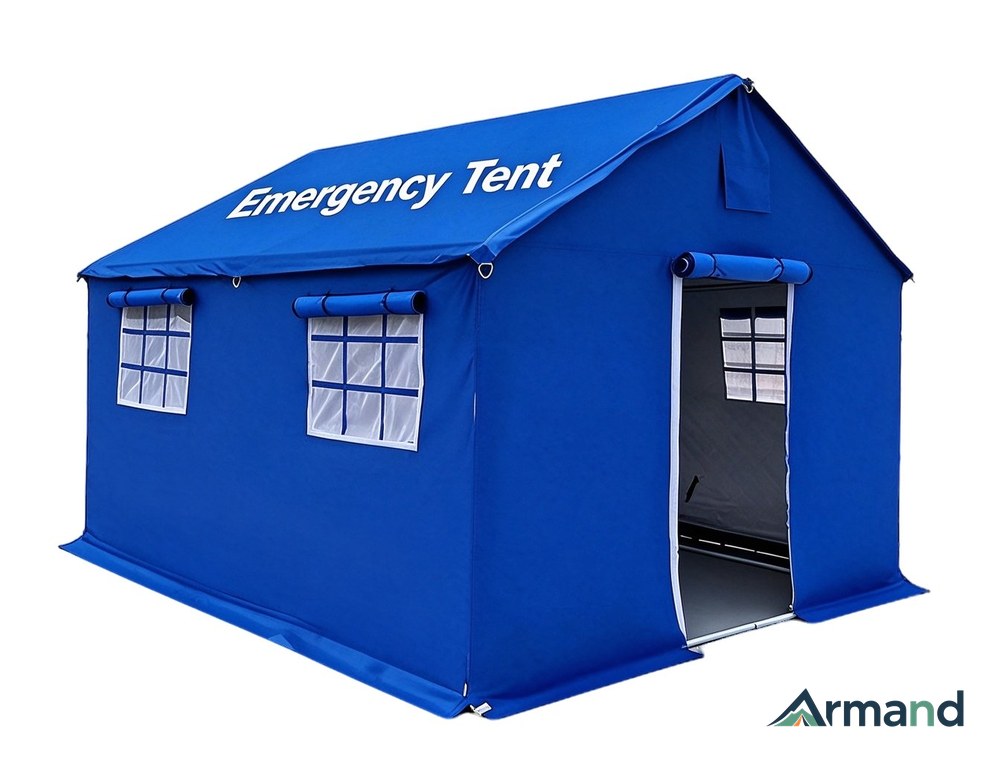
| Builds held | Cotton-padded, cold weather · Standard, single layer |
|---|---|
| Sizes | 8 · 12 · 20 · 36 · 60 m² |
| 12 m² model | 3.2 × 3.6 × 2.67 m (L × W × H) |
| 20 m² model | 3.63 × 5.6 × 2.51 m (L × W × H) |
| Frame | Galvanized steel tube · powder-coated tube · aluminium alloy |
| Cut to order | Size, fabric, frame and printed logo |
| Dispatch | From stock, on the next available sailing |
Two builds stay on the floor. The cold-weather tent is a cotton canvas shell made for winter and high-altitude relief, where warmth counts for more than packed weight. The standard tent is a single-layer coated shell for warm-climate response, field camps and general shelter. Both run on the same ridge frame, with the same roll-up windows and the same full-height door.
If you need a footprint or a fabric we are not holding, we cut to order on the same line. Send the dimensions, the fabric and your logo file, and the shelter is built as a custom run rather than sourced in from a second supplier.
Rigid-frame shelter, fast to erect, for temporary housing and clinics. Held in stock.
Request →Lightweight tube-frame shelter, packed per-family, moved by the pallet.
Request →Send dimensions, fabric and carton — we build it in our own plant and return a 48h data pack.
Request →Relief and emergency shelters are bought against a written specification, not a product listing. The issuing agency or NGO sets the size, the fabric standard and the packing format, and suppliers are measured against that document. On this line we work to your spec rather than pushing a stock style.
One caution that applies to every buyer in this space: we deal in physical supply only. Any approach that asks for a registration, deposit or certification fee before goods move is not a tender, and we do not engage with it.
A relief shelter is judged on the parts you cannot see in a catalogue shot: how the tube is cut, how the joints are bolted, how the guy lines are anchored and what the inside is lined with. These are the four we would want you to check.
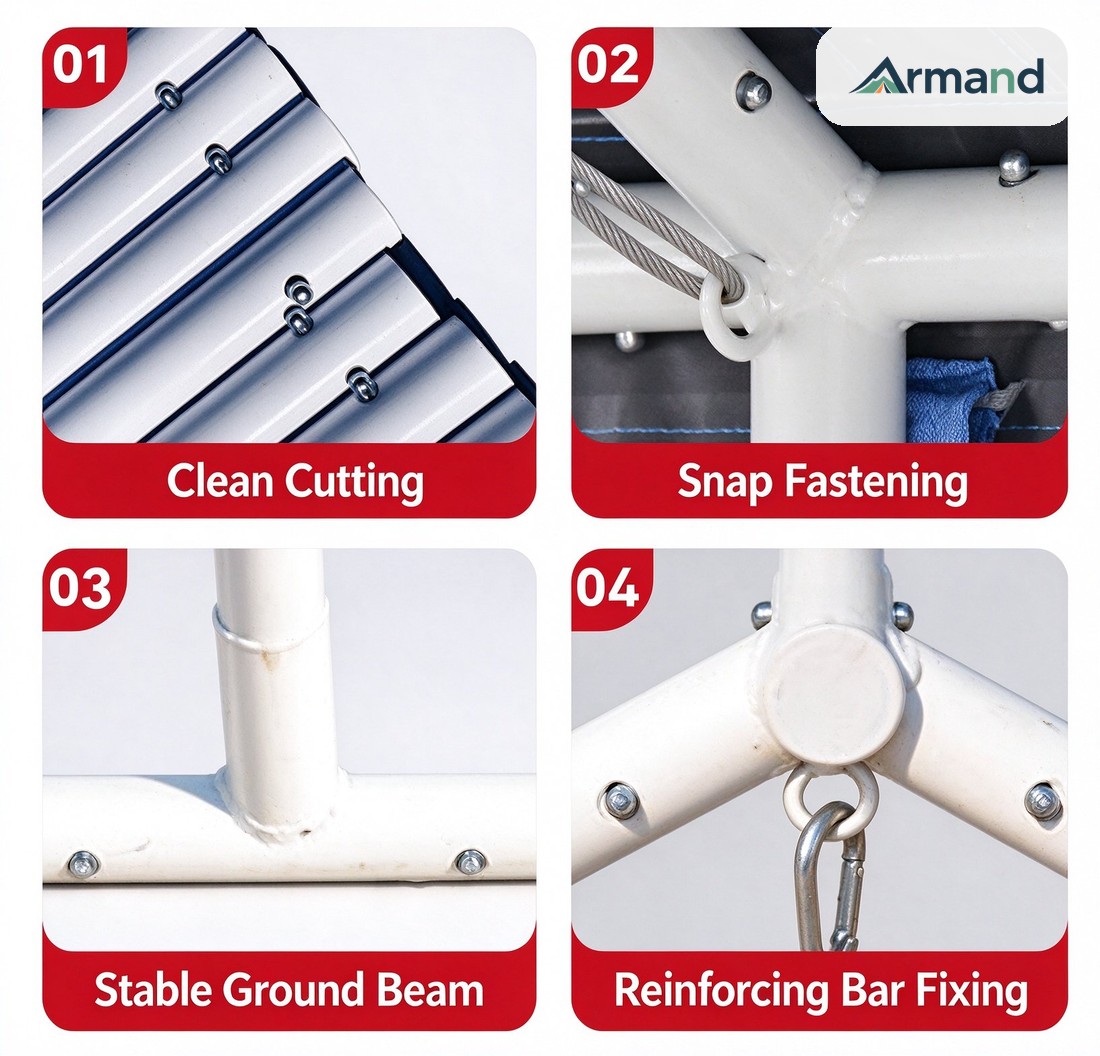
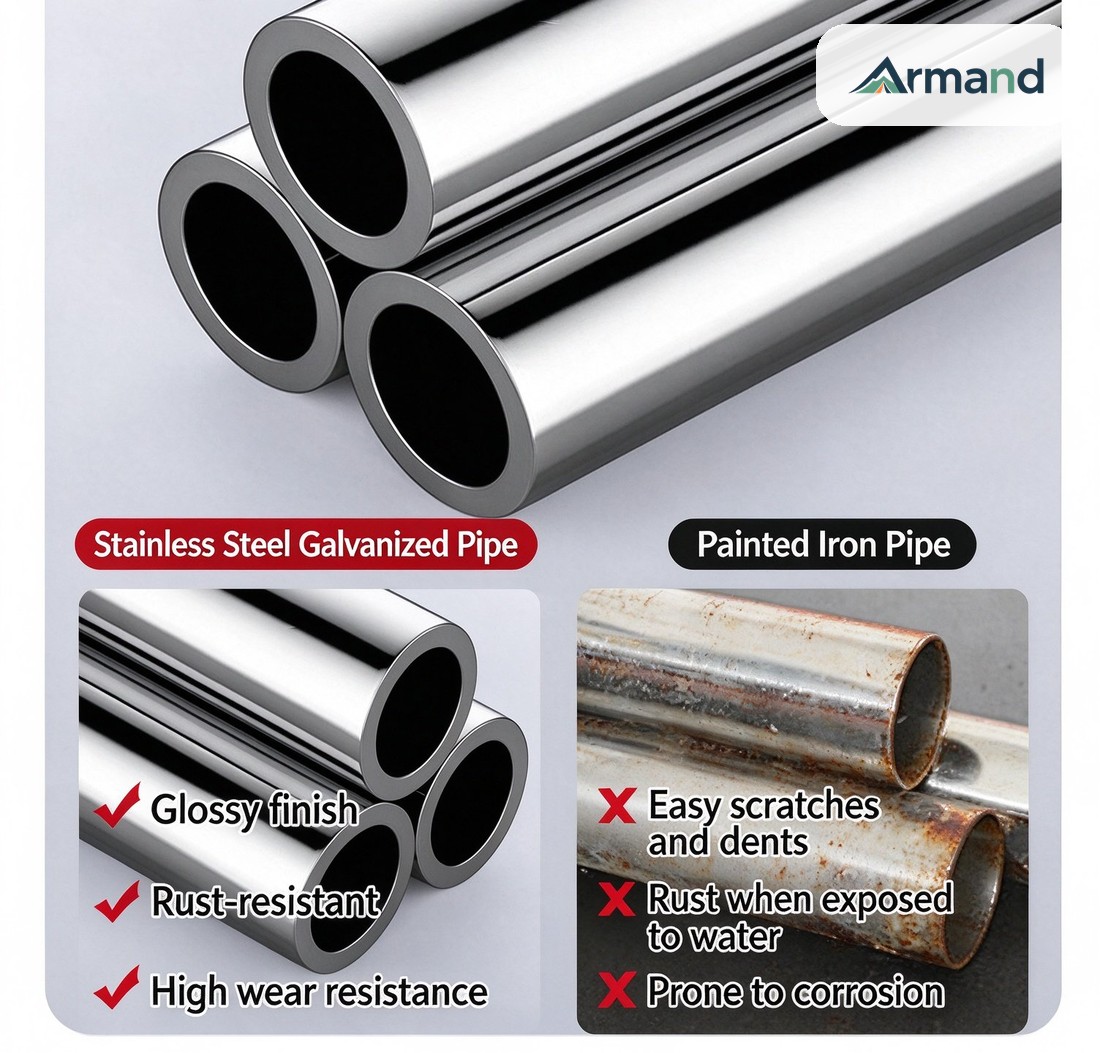
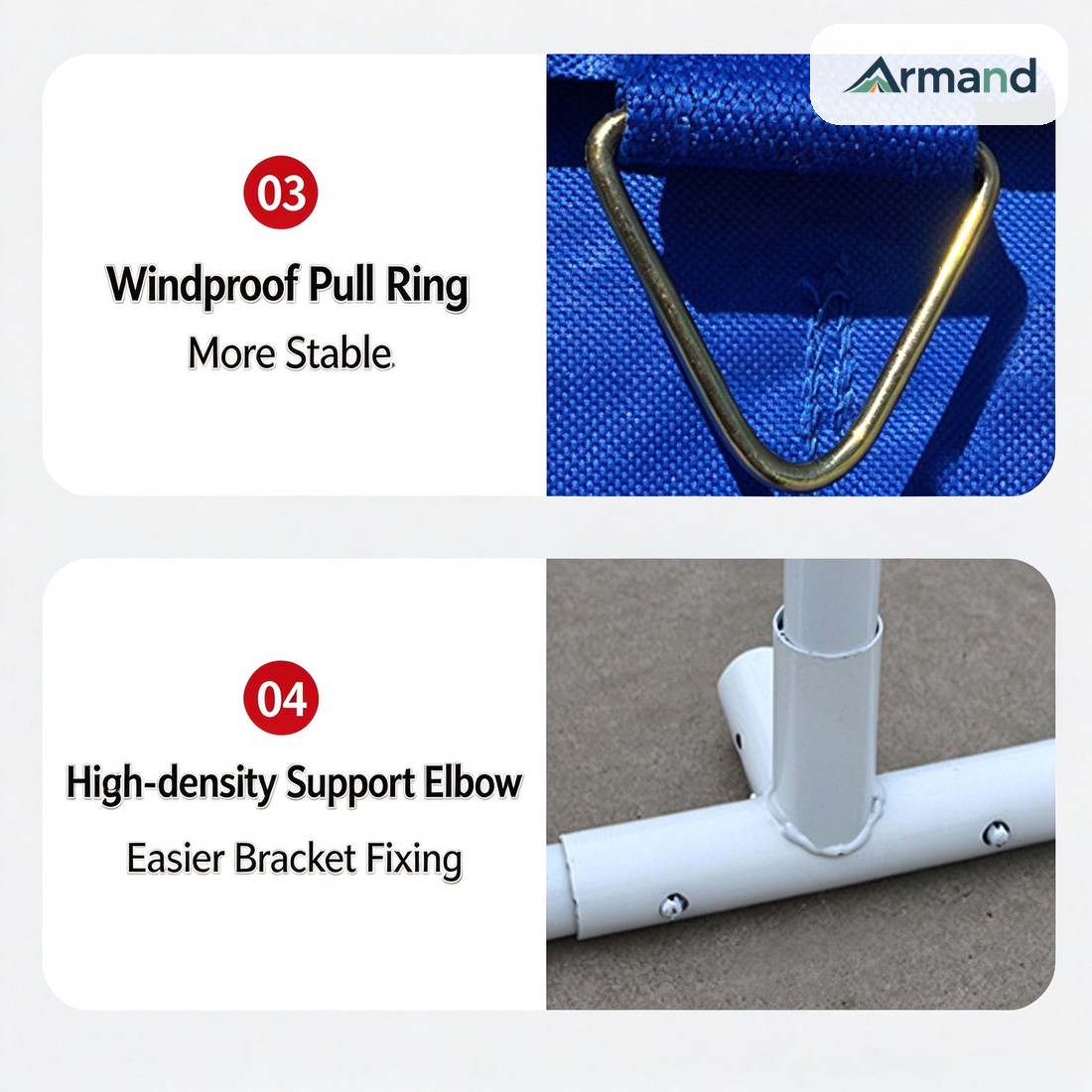
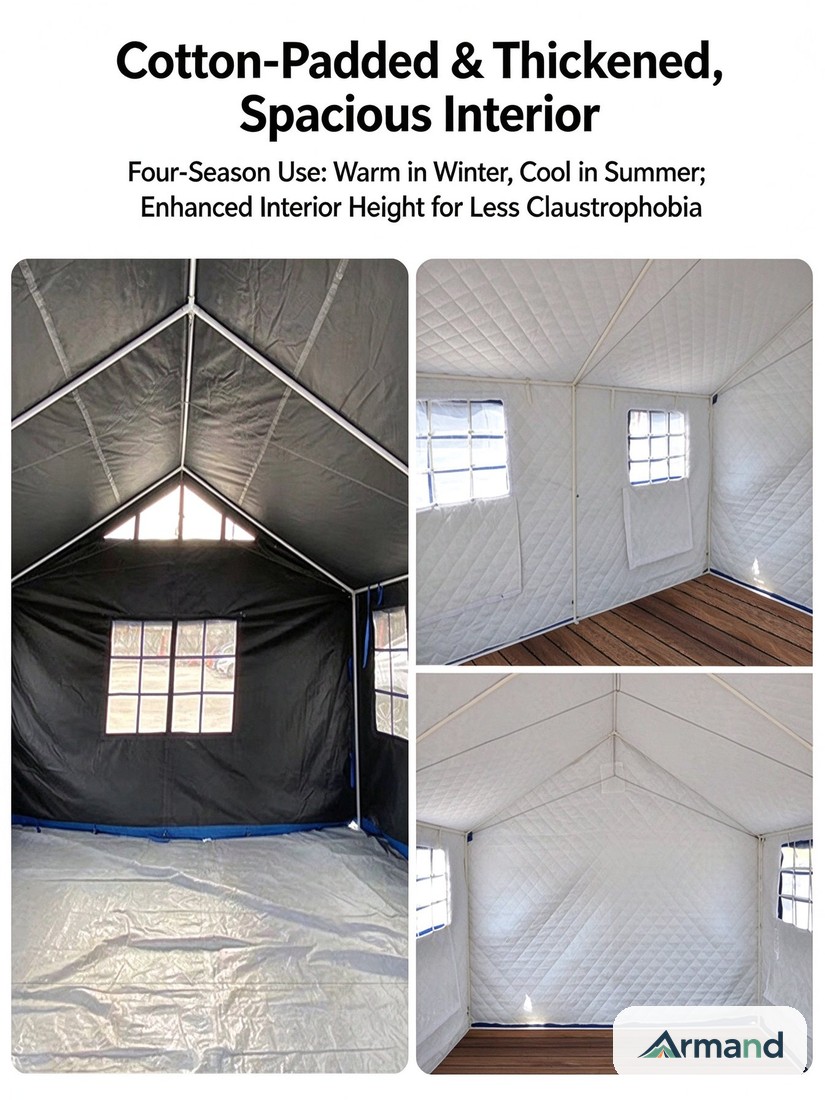
Five footprints cover most relief and field-camp work. If the tender names something else, the same line cuts it.
| Area | Footprint (L × W × H) | Tent body | Fabric | Frame |
|---|---|---|---|---|
| 8 m² | On request | One-piece fabric body, or cotton split body | Oxford cloth, customizable | Galvanized steel tube Powder-coated tube Aluminium alloy |
| 12 m² | 3.2 × 3.6 × 2.67 m | |||
| 20 m² | 3.63 × 5.6 × 2.51 m | |||
| 36 m² | 4.76 × 7.86 × 3.1 m | |||
| 60 m² | 10 × 6 × 3.1 m |
*More models available on request. Size, fabric and frame can be combined per order.
Area is the floor area on the footprint. The height given is the ridge, the highest point inside, not the wall height. Cotton-padded and single-layer shells run on the same frame, so the two builds can be mixed in one container.
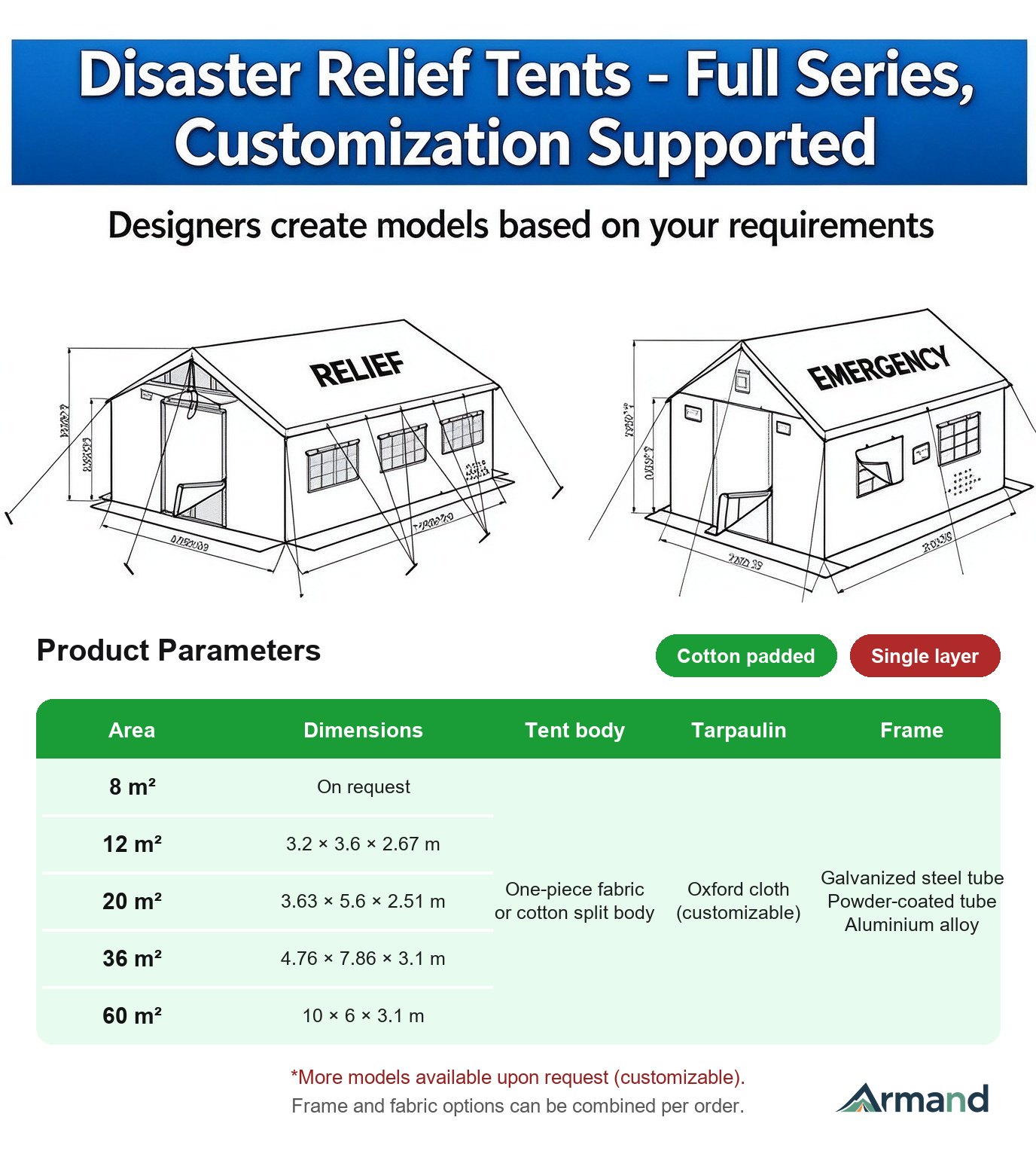
The designers here turn a brief into a model before anything is cut. Send the footprint, the fabric and the climate the shelter is going into, and you get a drawing, a fabric list and a price written against the same document your tender is based on.