
Bell, safari and lodge tents. A hot EU/US campground keyword with real margin — and a line buyers rarely price-shop as hard as commodity domes.
The lodge is the shape most resort and campsite operators start with. A tensile membrane roof stretched over a galvanised steel frame, on a footprint set by the site rather than by a fixed mould — so a small reception pavilion and a full dining hall leave the same line.
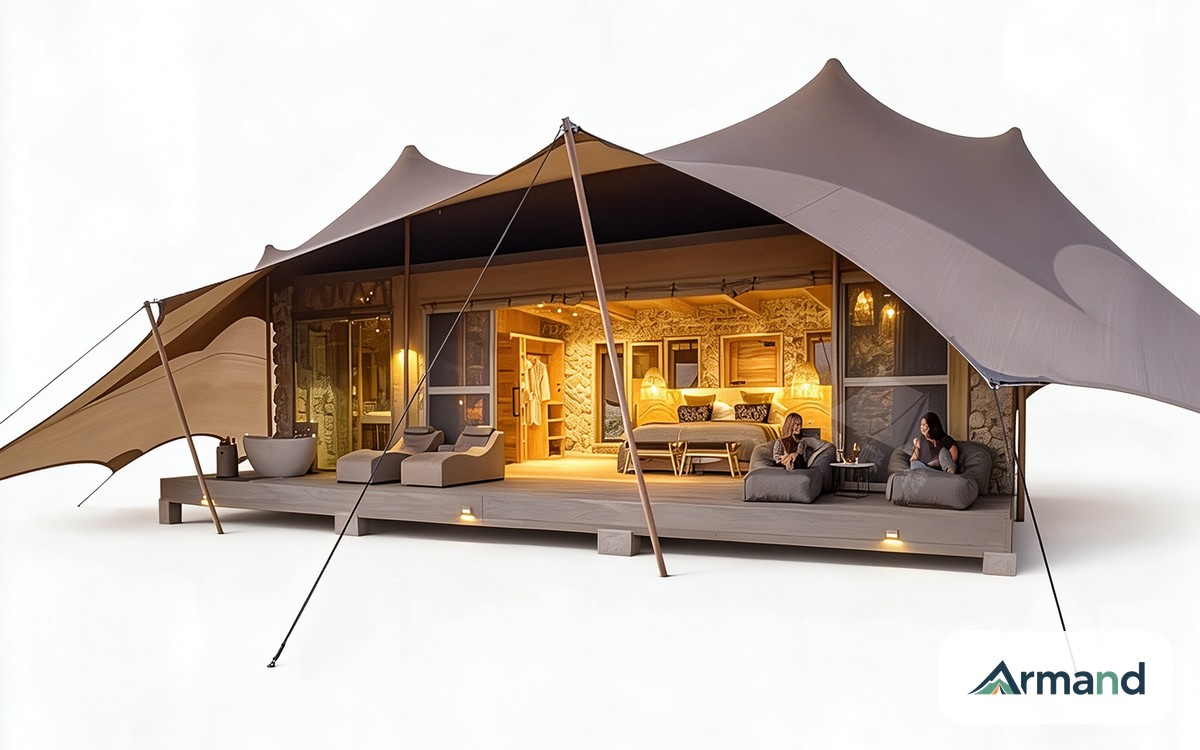
| Style | Twin-peak tensile membrane lodge |
|---|---|
| Roof | PVDF architectural membrane fabric |
| Frame | Hot-dip galvanised steel tube |
| Footprint | From 30 m² up to 3,000 m², sized to the site |
| Standard module | 600 × 800 cm |
| Installation | Crane or scaffolding assisted |
| Typical use | Resort rooms, restaurants, desert and forest camps |
| Price basis | Quoted per project against the layout |
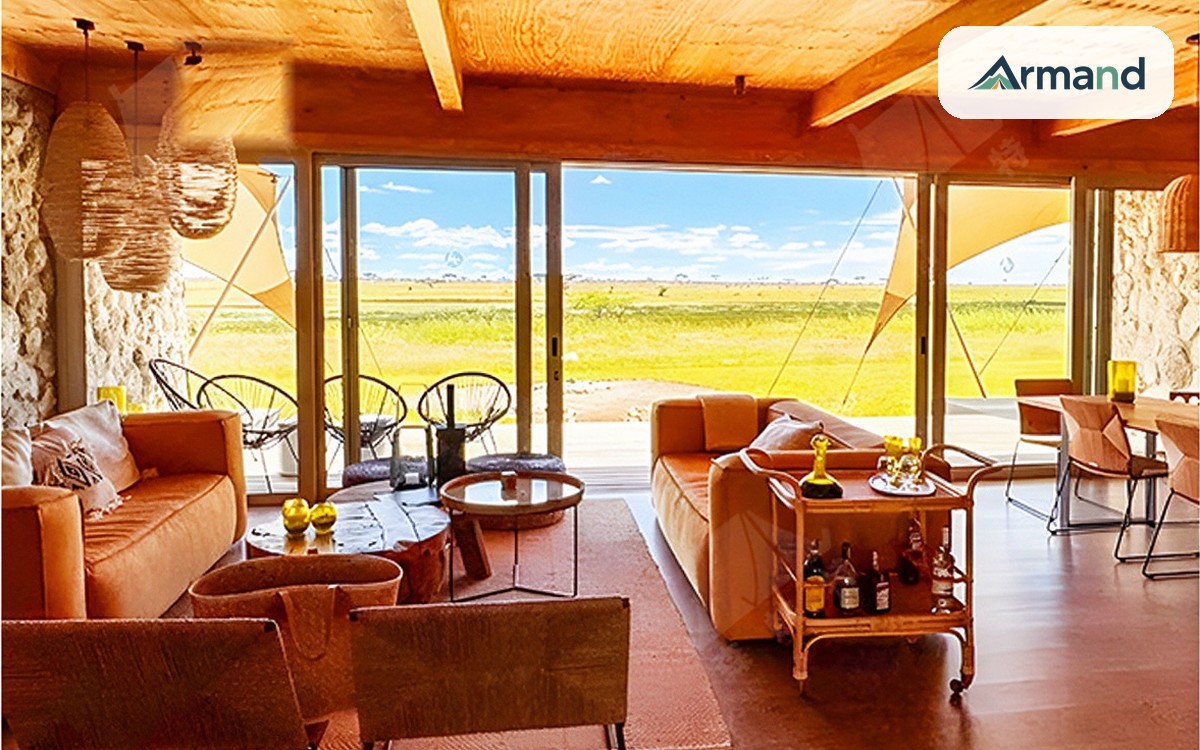
Tell us the plot size, how the space will be used and the port, and we return the frame sections, the roof take-off and the load plan on one sheet.
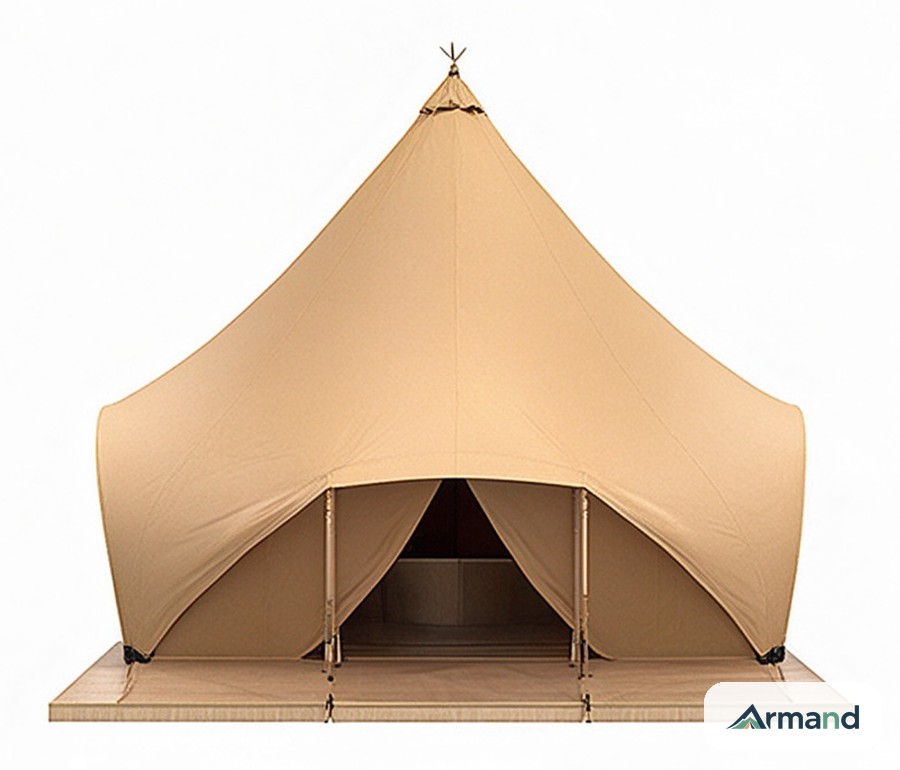
Cotton or poly-cotton bell, center pole, 4–6 m. Glamp-site staple.
See models →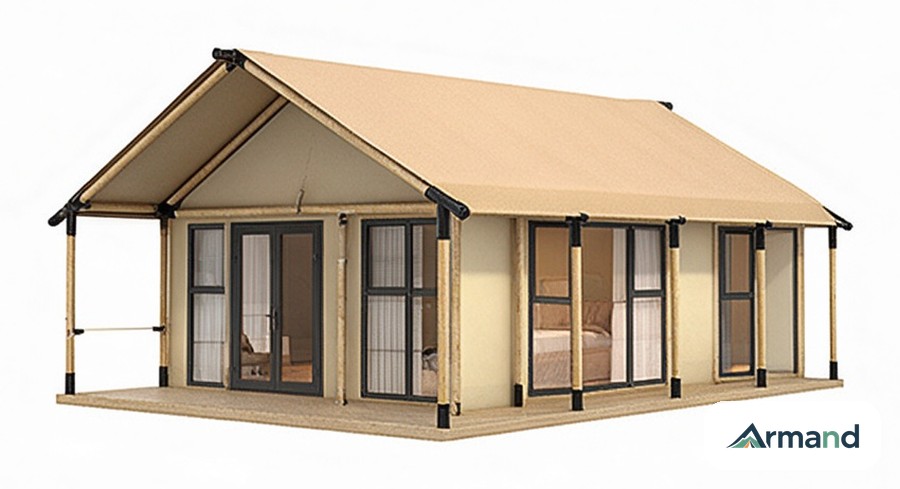
Rigid-frame lodge for resorts and hotels. Larger MOQ, higher ticket.
See models →Send dimensions, fabric and carton — we build it in our own plant and return a 48h data pack.
Request →A second, deeper range: twenty lodge, cabin, bell, dome and tensile models drawn for hotel rooms, resort reception pavilions, dining halls and campsite pitches. Every one is customizable in shape, structure and material.
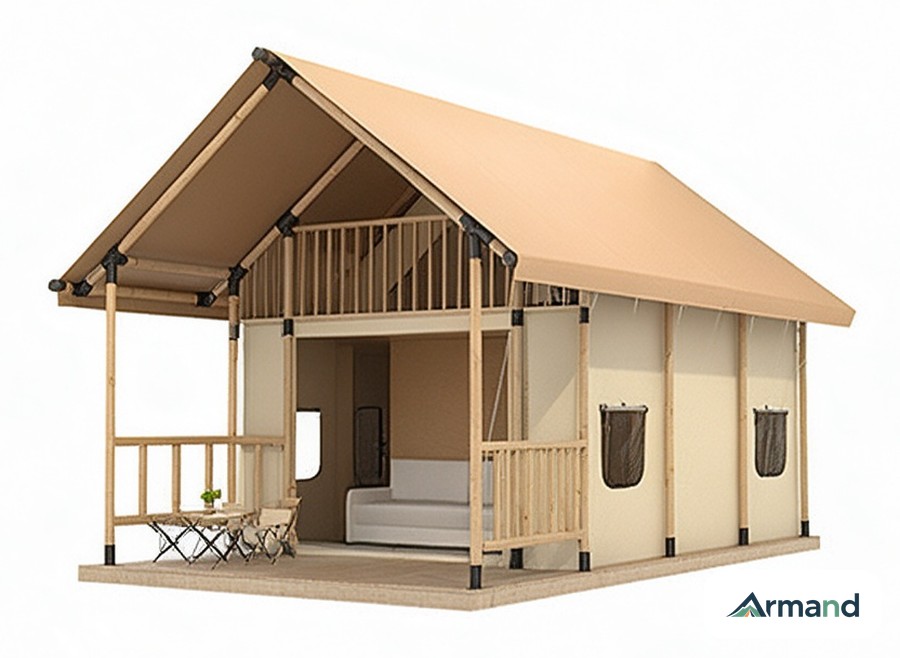
This is the range hospitality buyers work from. Lodge and cabin shapes carry most of it — they read as a building, hold a real bed and a bathroom pod, and keep their looks outdoors. Bell, dome and tensile shapes cover the softer briefs.
Glamping sits at the top of the tent range, so the buying logic is closer to hospitality than to camping retail. The buyer is usually a resort, a rental operator or a brand selling an experience, and they care about how the tent looks on a pitch and how long it survives outdoors.
Send the footprint or diameter, the fabric and weight, the frame material and whether you need a stove jack. From there we put a spec outline together and size the run.